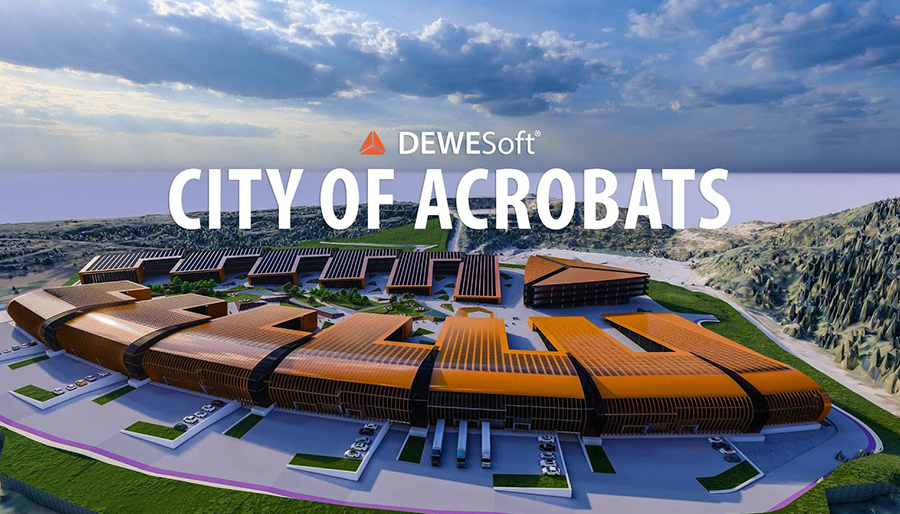
Slovenia-based Dewesoft has officially broken ground on the ‘City of Acrobats’, an ambitious multi-year construction project to develop a high-tech campus for start-ups and scale-ups in Slovenia. The initiative aims to strengthen the country’s entrepreneurial ecosystem and support the next generation of innovative companies.
Consultancy.eu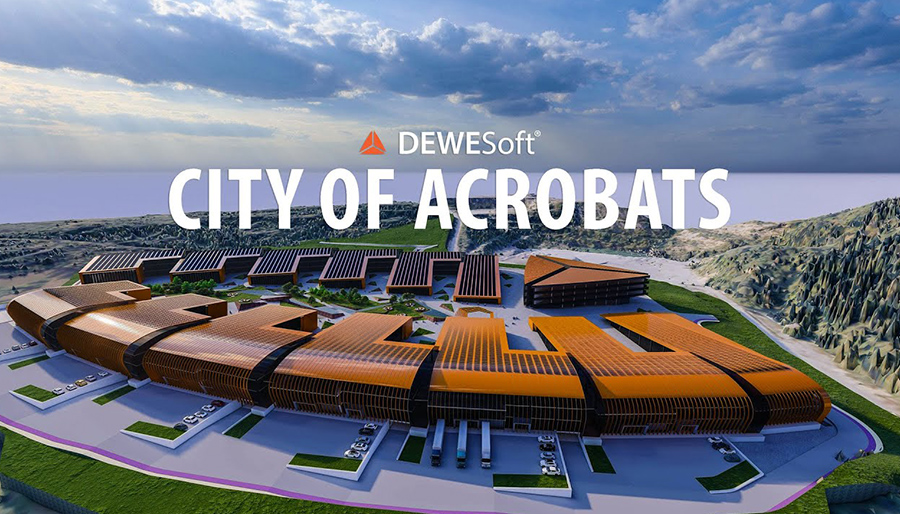
Slovenia-based Dewesoft has officially broken ground on the ‘City of Acrobats’, an ambitious multi-year construction project to develop a high-tech campus for start-ups and scale-ups in Slovenia. The initiative aims to strengthen the country’s entrepreneurial ecosystem and support the next generation of innovative companies.
The City of Acrobats, located in Trbovlje, is expected to open between 2032 and 2034. It will feature a 40,000-square-meter facility that is designed to become a unique technology hub in the heart of Europe. The project aims to help revitalise the Zasavje region by creating new opportunities for engineering, manufacturing and technology-driven entrepreneurship.
According to the business plan, the campus is expected to generate around 500 high-quality jobs within five years of opening, with the potential to grow to as many as 1,000 within a decade.
Commenting on the ambition, Slovenia’s Minister of Economic Development and Technology, Matjaž Han, said: “The main purpose of the City of Acrobats is to revive the economic development of the entire Zasavje region, which will also have a tremendous impact on the economic development of the entire country. The City of Acrobats will provide this space, and the area of Lakonca in Trbovlje is one of the few possible locations that meet all the criteria for the construction of such a tech park.”
The vision behind the tech hub
Designed to provide world-class production facilities and support services for startups and scale-ups, the tech park was initiated as a personal passion project by Jure Knez, founder and president of Dewesoft, a multinational in test and measurement solutions. The 10-to-12-year initiative is being financed entirely through Dewesoft’s profits.
The project builds on Knez’s own entrepreneurial journey and his ambition to create the kind of support environment he believes many young companies need to succeed. It also reflects a broader commitment to revitalising the Zasavje region, which has faced economic challenges following the decline of coal mining and the closure of many local factories.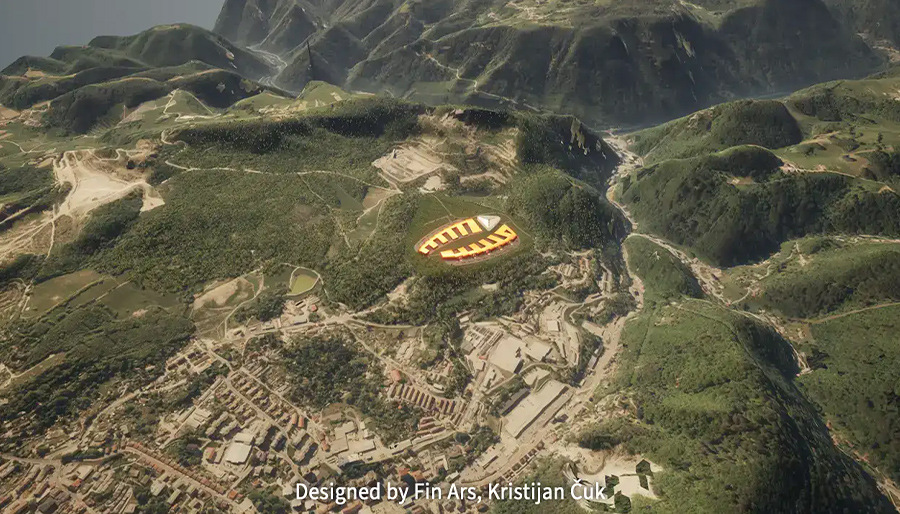
City of Acrobats will be based in the area of Lakonca in Trbovlje (Slovenia)
Project delivery model
The City of Acrobats is being delivered in collaboration with several partners, including AGM Nemec, responsible for structural and civil works, and Hilman Inštalacije, which handles technical installations, electrical systems, and plumbing infrastructure. Additional subcontractors are also involved. The park’s distinctive architecture was designed by Kristijan Čuk, drawing inspiration from and carefully integrating with the local environment.
To support the structuring of contracts with its external partners, Dewesoft turned to a method known as relational contracting – an approach that prioritises long-term collaboration, mutual trust, and shared value creation over traditional transactional agreements.
Jeroen van de Rijt from Prowez (a boutique advisory firm from the Netherlands) and Sibrecht Diender from Yellow Everest (a firm specialised in relational contracting) were engaged to guide Dewesoft through the relational contracting process. They acted as strategic deal architects and coaches, supporting all parties in the co-creation of a highly collaborative contract framework.
Mitigating risk through collaborative contracting
Because the project will be developed modularly over a timespan of a decade, as funding becomes available, traditional construction risks such as cost overruns, delays, and supplier disputes pose significant challenges. To safeguard the project’s long-term viability, Dewesoft leveraged Prowez’s expertise in the Vested methodology to align all parties involved.
The Vested methodology is a model originally developed by Kate Vitasek and researchers at the University of Tennessee that shifts relationships from traditional buyer-supplier contracting to highly collaborative, outcome-based partnerships.
Building on this approach, Prowez and Yellow Everest facilitated a highly collaborative approach, resulting in a landmark trilateral Vested agreement between Dewesoft, AGM Nemec, and Hilman Inštalacije.
“This flexible contracting framework fully aligns the incentives of the client and the contractors, transforming a standard construction project into a shared, win-win venture,” said Van de Rijt. “In short, all parties succeed or fail together, ensuring full alignment around a common goal.”
Diender added: “Traditional contracts often try to predict and control everything upfront. For a project of this scale and duration, that is simply not realistic. A relational contract provides a framework that keeps the parties aligned over time, so they can respond to change, solve problems together and continue making decisions in the best interest of the shared ambition.”
Through Dewesoft’s decision to move away from traditional transactional procurement towards relational contracting, the project is already showing early benefits, including cost and time savings even before major construction work has begun.
From Slovenia to beyond
Van de Rijt and Diender have successfully applied the Vested approach in a wide range of client contexts, from the Netherlands and other European markets to the United States and Southeast Asia. According to Van de Rijt, the Slovenian case further demonstrates the broad applicability of the Vested methodology across sectors, geographies and cultures.
“In an increasingly complex delivery environment, relational contracting is emerging as a new blueprint for supplier-based contracting on large-scale, long-term construction projects,” he said.
As the City of Acrobats takes shape over the coming years, the project will not only test the potential of a new technology campus, but also the strength of a different way of contracting. If successful, it could become a reference point for how complex, long-term projects can be delivered through trust, transparency and shared ambition.
VIR: https://www.consultancy.eu/
Editor
Avtor pri si24.newsNajbolj brano

Taylor Swift in Travis Kelce sta poročen...
Opel ima mobilne polnilnice za reli: ele...

XPeng L03: v Evropi napovedan novi elekt...

Bitka za županske stolčke: Kdo se bo pot...
Slovenski gradbeni velikani v vzponu: ne...

Novo kopališče v Rogaški Slatini: Euroja...
Velika Plešivica pri Adlešičih: Namenu s...
Dewesoft’s City of Acrobats partners wit...

I FEEL DANCE